Niger
En FrançaisCRISIS UPDATE:
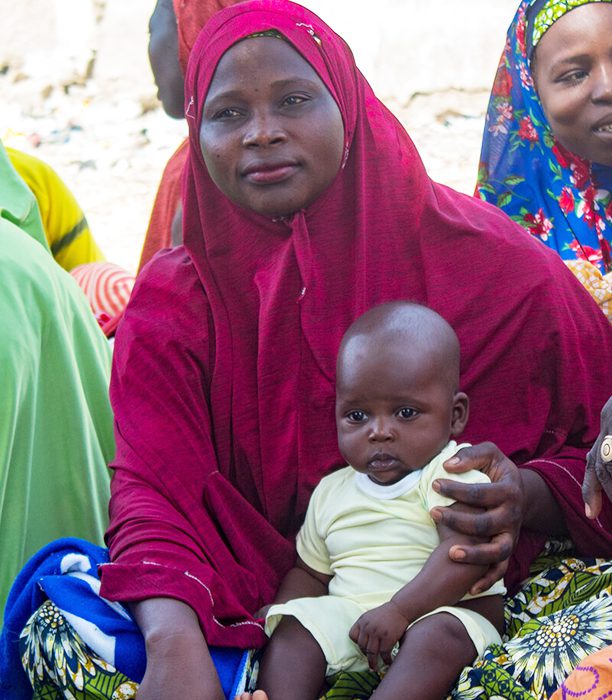
In response to deepening concern about the impact of very poor rains during the last growing season, Niger’s transitional government has acknowledged the food insecurity that is affecting nearly half of the population of 15 million in this semi-arid African nation. Helen Keller International is working with government, partners and communities to respond to this crisis by supporting community rehabilitation programs for malnourished children. To help our life-saving efforts, please donate today.
The Problem
- Niger is ranked as the second least developed country in the world by the United Nations Development Program; one Nigerian child in four dies before reaching 5 years of age.
- Food insecurity and malnutrition are widespread problems in Niger; the country suffers from food shortages every year.
What HKI Is Doing
Helen Keller International began working in Niger in 1987; current programs include:
- Vitamin A Supplementation Read more
- Community-based Management of Acute Malnutrition Read More
- Trachoma Control Read more
- Onchocerciasis Control Read more
Vitamin A Supplementation
HKI integrates vitamin A supplementation into routine immunization activities and helps organize National Micronutrient Days (NMD) as part of a mass distribution strategy for both vitamin A and iron. Last year, 90% coverage was achieved, or over 2.4 million children aged 6-59 months.
Community-based Management of Acute Malnutrition
Malnutrition remains a serious public health and development problem in countries in the Sahel region (on the southern border of the Sahara desert), like Niger. In 2005, Helen Keller International responded to the food crisis in the country and treated over 37,000 acutely malnourished children under 5 with a recovery rate of 91%. After this crisis, HKI and partners worked to develop and institutionalize the treatment and prevention of malnutrition. The Community-based Management of Acute Malnutrition (CMAM) model provides a holistic approach by building the capacity of community structures already in place, training community members, and minimizing the time mothers and children must be away from the home at emergency feeding centers.
HKI’s CMAM program is active in three regions in Niger, Diffa, Dossa and Zinder. In one year, 575 health workers and village volunteers were trained to prevent and treat malnutrition. Only acutely severe malnourished children with complications are kept in the centers; children with appetites receive ambulatory care and caretakers are provided with Ready-to-Use-Therapeutic Foods (RUTF), such as Plumpy’nut, as well as medication and instructions for the treatment at home. In 2008, over 11,300 children were treated with supplementary feeding (those with moderate, acute malnutrition) while almost 1,700 were treated with therapeutic feeding (those with severe, acute malnutrition).
The Essential Nutrition Actions (ENA) are an integral approach to all of HKI’s nutrition work. HKI promotes ENA to teach mothers and caregivers practical activities for infant and young child care. In the past year, over 31,500 pregnant or lactating mothers received counseling on infant and young child feeding. In addition, over 210,000 people received information on ENA through radios broadcasts, group discussions, and one-on-one communications. A recent child survival project in Niger that utilized the ENA approach was highlighted on USAID’s website.
Trachoma Control
Helen Keller International works closely with The Carter Center and The National Blindness Prevention Program to eliminate trachoma as a cause of blindness in Niger. HKI implements all four components of the WHO-endorsed SAFE strategy (Surgery, Antibiotics, Facial cleanliness, Environmental improvement), as part of our trachoma control program. HKI trains trichiasis operators to perform eyelid surgery, distributes antibiotics to prevent and fight active infections, and helps set up mobile screening and surgical camps to bring services to those in hard-to-reach areas. HKI also works with rural radio stations to help raise awareness about trachoma and promote behaviors and activities that will help eliminate the disease. HKI rehabilitates radio stations that have fallen into disrepair, trains DJ’s and radio animators, and helps develop the messages that will be broadcast.
HKI also advocates for lessons about trachoma to be integrated into national school curricula and trains teachers about trachoma control and improved hygiene practices.
Onchocerciasis Control
After 27 years of intensive actions and interventions by the Onchocerciasis Control Programme of West Africa (OCP), the transmission of the disease has been interrupted. The goal now is to preserve the accomplishments made under OCP. With HKI’s support, information, education and communications activities were targeted at populations within the intervention areas, and as a result, the prevalence rate is almost equal to zero.
- Recent News
- "An African Adventure, and a Revelation"
- "The Breast Milk Cure"
- "Niger Determined to Continue Efforts Against Child Malnutrition"
- more...
- Key Publications
- Private-Public Partnerships Drive One Solution to Vitamin and Mineral Deficiencies: "Fortify West Africa"
- (NNA April 2011_Eng) Repositioning children’s right to adequate nutrition in the Sahel: Results of a Situational Analysis
- (NTD Mar 2011) Incremental cost of conducting population-based prevalence surveys for a neglected tropical disease: the example of trachoma in 8 national programs
- more...