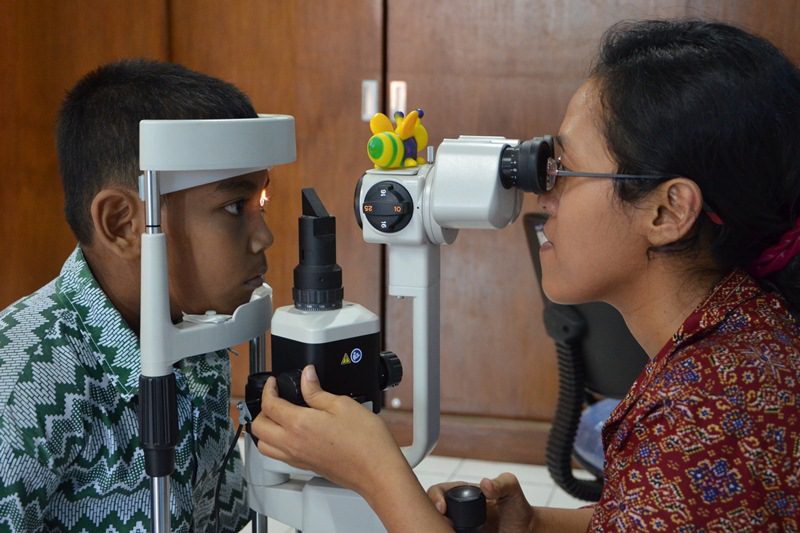
Helping People See
Soon after I graduated from the University of Nairobi with a degree in Ophthalmology, I worked in an eye hospital where I would see up to 100 patients a day and perform 100 surgeries a week. When I moved to Ethiopia, I worked for the government in Addis Ababa in challenging situations where there was a limited supply of equipment and consumables to perform surgery. From the experiences in these two countries, I always felt honored to be a medical professional, a clinician; communicating with patients, listening to their woes and providing service in the form of medication or surgery.
When I moved to Indonesia in 2008 I was shocked to learn that expatriate doctors were not permitted to perform clinical practice. After hearing about Helen Keller International and their work in the region, I met with John Palmer, who was the country director at the time. He arranged for me to start working with the eye health programs in Jakarta.
Initially, it seemed odd and difficult to be seated in front of a computer and develop plans and activities in the field and not interact with patients. I was apprehensive about how I could reach out to vulnerable people without being able to examine them and treat them either through medication or surgery. I was uninformed about the impact of development programs that integrate vision, health and nutrition.
Throughout my many years at Helen Keller, I have continually learned the importance of working in development. Working with teams to prevent blindness through developing innovative programs, using advanced technology and sustainable approaches, providing training, engagement with stakeholders at various levels, advocacy to the government, and integrating these proven programs into existing health systems are all crucial to preventing blindness and vision problems in adults and children.
Diabetics are at an increased risk of developing eye complications like cataract, glaucoma and diabetic retinopathy. Diabetic retinopathy is an asymptomatic complication that can cause blindness if not identified early. Helen Keller programs provide education to improve awareness for diabetic retinopathy in communities, screenings to ensure early detection of the condition, and treatment by laser photocoagulation surgery when necessary. This also involves improving the knowledge of doctors and healthcare professionals about this condition.
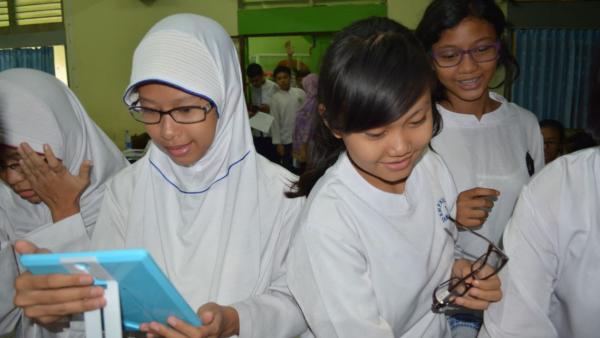
Sukma, Lita Puspita and Amrizal Anwar are higher secondary students who were finding it difficult to read what was written on the board in the classroom and concentrate in class due to headaches and problems with their vision. Helen Keller’s US Vision programs made it possible for children to be screened by their teachers, refracted by trained opticians, and receive free eyeglasses. Now they feel empowered, confident, and are ready to take on any challenges put forth to them.
As part of the Helen Keller team, I am glad that I can touch the lives of the most vulnerable and disadvantaged, by planning programs and bringing forth initiatives to prevent vision loss and restore vision wherever possible.
I now contribute towards the fulfillment of my passion and the fulfillment of Helen Keller’s mission: Helping People See.